Swimming Between Two Continents at Silfra
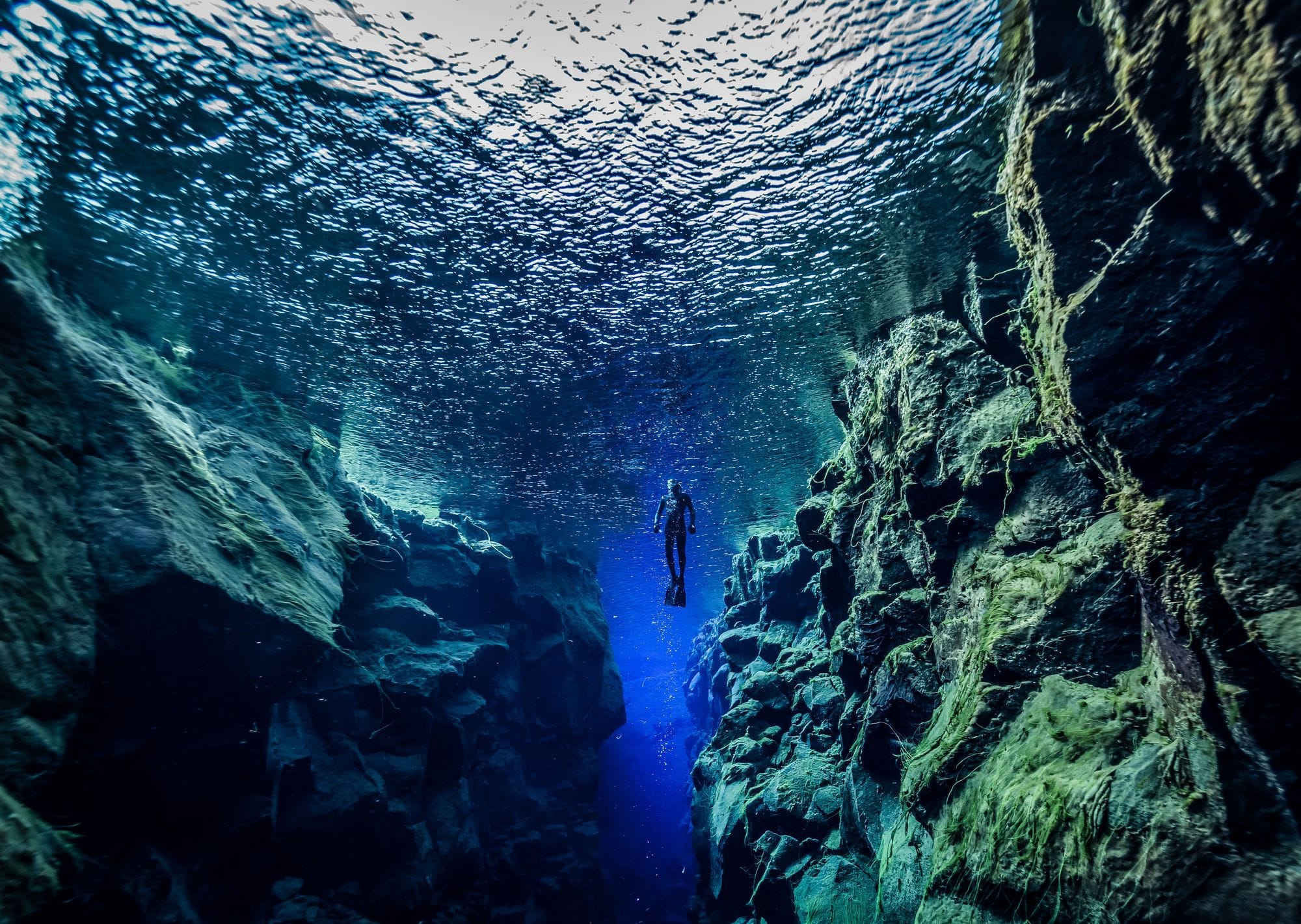
The Silfra fissure was formed by earthquakes and the slow drift of the continents, creating a crystal-clear water-filled rift that expands by about 2 cm every year. It’s the only place on Earth where you can swim directly between two continental plates.
Rift Like Nowhere Else on Earth
Silfra is one of the world’s most extraordinary snorkeling and diving sites, located in Þingvellir National Park, about 45 minutes from Reykjavík. What makes it unique? You’re not just swimming in a lake — you’re literally drifting between two tectonic plates: North America and Eurasia.
The Clearest Water in the World
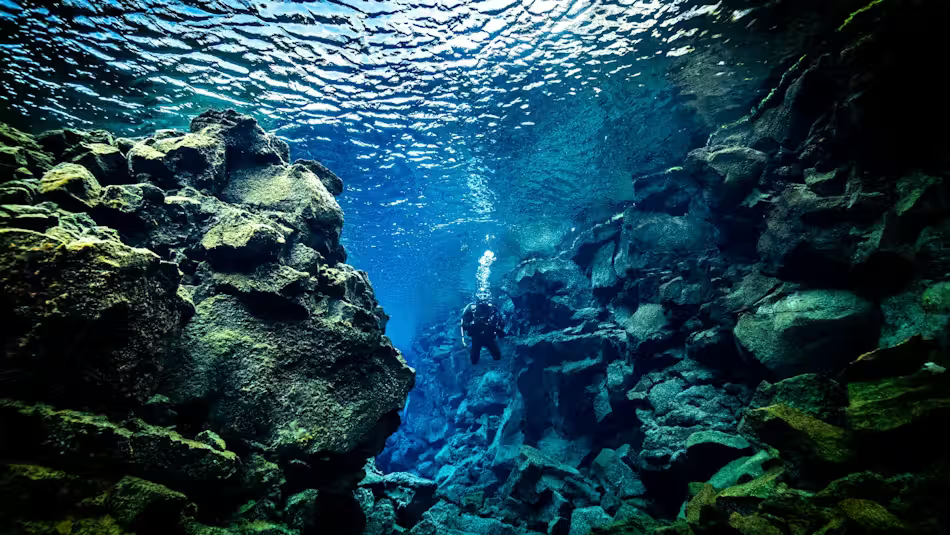
Silfra is fed by glacial meltwater from Langjökull, which is filtered through lava rock over the course of decades. By the time it reaches the fissure, the water is so pure that visibility can reach over 100 meters. Snorkelers often say it feels like floating in the air. And yes, you can even drink it while you swim.
Is It Cold?
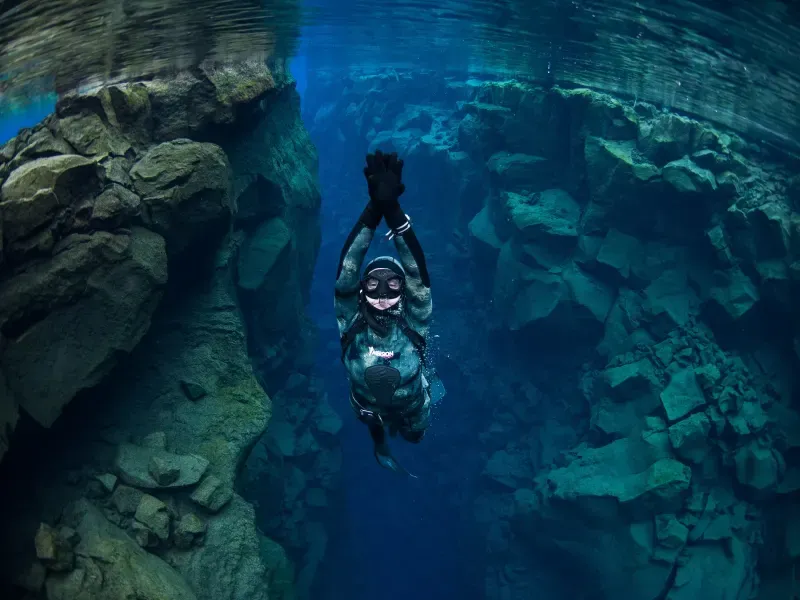
Yes — Silfra stays around 2–4°C (35–39°F) year-round. That’s why everyone wears a drysuit (or sometimes a thick wetsuit). Once you’re suited up, the cold is surprisingly manageable, and the experience quickly makes you forget about the temperature.
The Experience
- Snorkeling: The most popular option, suitable for beginners and non-divers. You float gently with the current through sections of the fissure with names like “The Cathedral” and “The Lagoon.”
- Diving: For certified drysuit divers, this is one of the most bucket-list dives in the world.
- Duration: About 30–40 minutes in the water, with preparation and gear fitting taking longer.
Why You Shouldn’t Miss It
Swimming between continents is not just about bragging rights — it’s a surreal, otherworldly experience. The clarity, colors, and feeling of floating between worlds make Silfra one of the most unique natural wonders you can visit in Iceland.
Thank you for reading this page. We hope it was informative, If not please let us know through [email protected]
Everyday Icelandic Food (Not the Tourist Version)
February 2026
Do You Need a 4x4 in Iceland? When, Where, and Why
February 2026
What Locals Do Differently in Winter in Iceland
February 2026
Reynisfjara After the Erosion: What Has Changed and Why It Matters
February 2026
Öskudagur in Iceland: From Ashes to Costumes
February 2026
Water in Iceland: Why It’s Among the Cleanest in the World
February 2026